Flexible Cystoscopy in Abu Dhabi: What It Shows and When It Is Needed
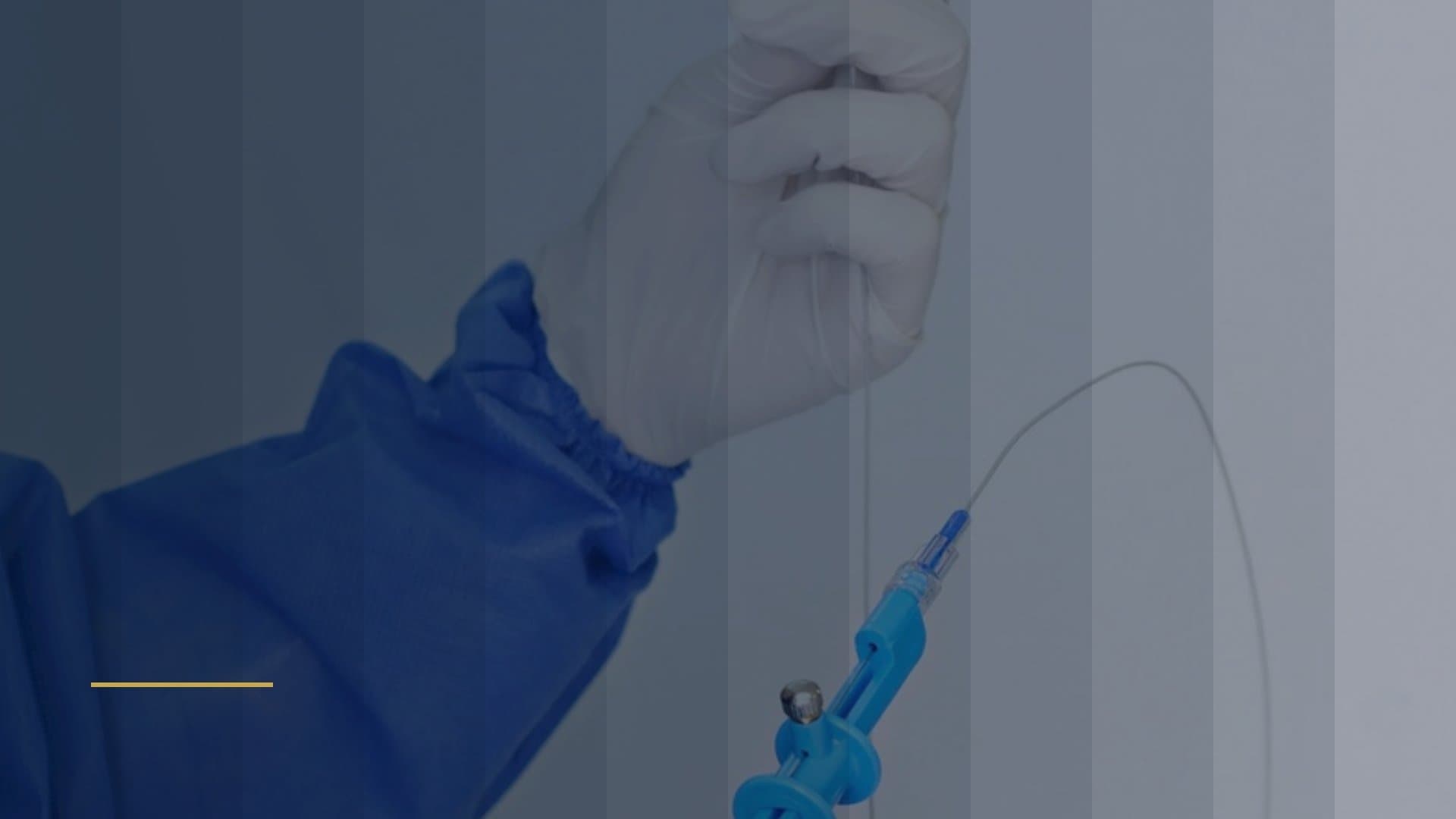
Flexible cystoscopy passes a thin, bendable camera along the urethra into the bladder, with anaesthetic gel rather than an anaesthetic, in about ten minutes, and you walk out afterwards. It exists because no scan sees the inside of the bladder well enough: an ultrasound and even a CT can miss a flat tumour that a camera finds immediately. When there has been visible blood in the urine, this is the test that settles it.
- Confidential consultation
- Consultant Urologist & Andrologist
- NMC Royal Hospital, Abu Dhabi
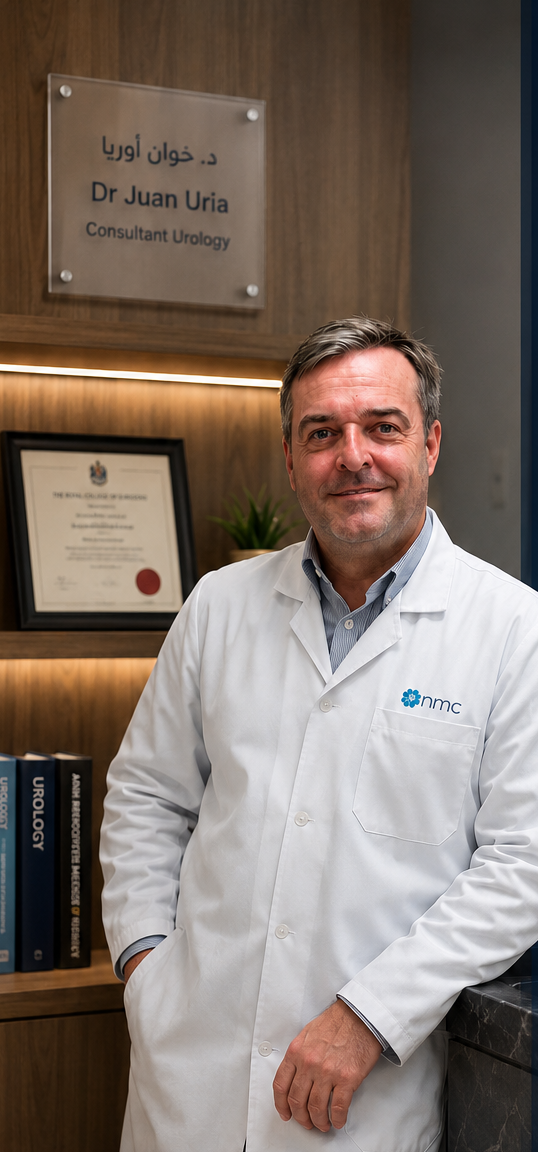
Dr. Juan Uría González-Tova · Consultant Urologist & Andrologist · NMC Royal Hospital Khalifa City, Abu Dhabi
Medically reviewed by Dr. Juan Uría · August 20, 2026
Take the self-assessmentTwo minutes. Nothing is sent or saved.The flexible instrument is the reason this became an outpatient test. It bends with the natural curve of the urethra, which is what makes it tolerable under local anaesthetic in men, where the older rigid scope required an anaesthetic and a theatre. The camera is passed, the bladder is filled with saline so its lining can be seen properly, and the whole surface is inspected along with the openings of both ureters and, in men, the prostate as the scope passes it.
The main reason to do it is visible blood in the urine, even once, even painlessly, and even if it never came back. Painless bleeding that stops on its own is the classic presentation of bladder cancer, and the fact that it stopped is exactly why it gets ignored. The other common reasons are surveillance after a bladder tumour has been treated, urinary symptoms that do not fit the prostate, recurrent infections that keep returning to the same place, and removing a ureteric stent.
It is worth being straightforward about how it feels. Most men describe it as uncomfortable rather than painful, with the sharpest moment lasting a few seconds as the scope passes the prostate; women generally find it easier because the urethra is shorter. Stinging on passing urine and a little blood for a day or two afterwards are normal. A small number of people develop a urine infection, which is why symptoms of one in the following days should be reported rather than waited out.
Check your own symptoms
Do you need a cystoscopy?
A structured screen written for this page, following the criteria used to decide who needs the bladder looked at and how quickly.
One question does most of the work here, and it is the first one.
Question 1 of 5
Choose the closest answer
What the assessment involves
Cystoscopy is rarely the whole assessment. In haematuria it is paired with imaging of the kidneys and ureters, because the camera sees the bladder and nothing above it — and the two together are what makes the work-up complete.
Whether the blood was visible or found on a dipstick, since the two carry different degrees of urgency and different pathways.
Imaging of the upper tracts — a CT urogram where haematuria is visible — because a kidney or ureteric tumour will not be seen by the scope.
A urine culture beforehand, because an active infection both causes bleeding and makes the procedure inadvisable until treated.
Smoking history and occupational exposure to dyes, rubber, paint or solvents, which raise the probability enough to change how hard one looks.
Anticoagulants, which usually do not need stopping for a diagnostic cystoscopy but must be known about before rather than discovered during.
Common questions
01Do I really need this if the bleeding only happened once and stopped?
Yes. A single episode of visible blood that never returns is the presentation urologists are most concerned by, precisely because it reassures people into waiting. It is not explained away by a course of antibiotics, by exercise, by a known prostate problem, or by the bleeding having stopped. Most people investigated turn out to have something benign — but that is established by looking, not by assuming.
02Will I be asleep?
No — a flexible cystoscopy is done awake, with anaesthetic gel in the urethra. You can watch the screen if you want to, and many people do; it makes the explanation afterwards much easier. A rigid cystoscopy under general anaesthetic is a different procedure, used when something needs treating rather than only looking at.
03What happens if something is found?
You are told during the procedure, not left to wonder until a letter arrives. If a tumour is seen it is not removed at that appointment; it is described, and a second procedure under anaesthetic is arranged to resect it and send it for analysis, which is what establishes the grade and stage. Bladder tumours found early are usually treated through the urethra with no incision at all.
About Dr. Juan Uría
Dr. Juan Uría González-Tova is a Consultant Urologist and Andrologist at NMC Royal Hospital, Khalifa City, Abu Dhabi, with over 30 years of clinical practice. He gained his medical degree at the University of Oviedo and his PhD at the University of Barcelona, and has practised in Abu Dhabi since 2018. Consultations are held in English, Spanish or Catalan.
View Dr. Uría's official NMC profileBook a consultation
Consultations take place at NMC Royal Hospital, Khalifa City, Abu Dhabi, in English, Spanish or Catalan.
Related topics
This page is general medical information and does not replace individual medical advice, diagnosis or treatment. If you have symptoms, seek assessment from a licensed physician.